// Rebuilding_Creativity
ai
Automation in Retail – The Next Competitive Advantage?
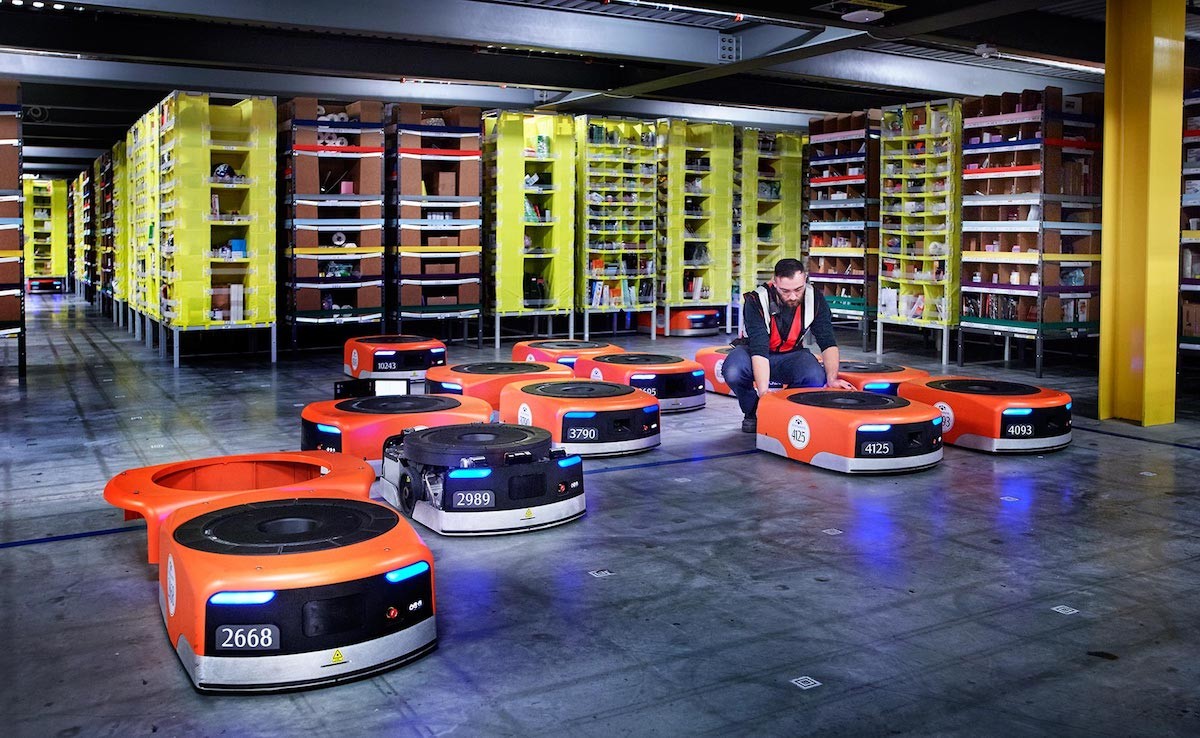
Did you know Amazon currently has a workforce of over 350,000 robots in their warehouses? I was recently reading an article by McKinsey on the challenges that traditional retail is currently facing with declining profitability, evolving consumer preferences, and the accelerating growth of e-commerce. Currently in the face of this, most retailers have taken a softly softly approach, underinvesting in future focused capabilities such as IT, digital, and tech talent.
The research found that a surprising 52 percent of retail activities could be automated, at least partially (exhibit below). The fact that over half of retail activities could be automated really hit home to me about the size of the prize in this space as a competitive advantage to not only become more operationally efficient but at the same time deliver a better customer experience.
The below visual from the report shows a cross section of industries, the types of tasks and % of automation potential. Whilst it shows retail still has a significant human element required in the “interface with others” (read my post on a consideration of charm), it shows there are a large number of data processing and predictable tasks that have automation potential – think customer order processing, product & promo pricing, inventory order forecast & management.

So how can Automation be put into practice for retailers? The report indicated three main areas of focus.
Step 1, review and simplify core business processes. Taking a customer first approach is key here, if you approach organising the business around what the customer wants you will always be led in the right direction. They found that process-redesign efforts here can see efficiency improvements in reducing steps by 20% to 30%. As an example, complex processes such as promotion management often involved more than eight steps and more than four teams, with opportunity to streamline with workflow tools. Workflow management tools can help to also smooth decision processes and simplify validation steps – with opportunity for 50% to 70% percent reduction in steps whilst maintaining nearly 100% accuracy
Step 2, automation. Once processes are simplified, retailers can look to build automation into them, at a basic level I’ve seen this done with robotic process automation (RPA) for manual tasks such as data entry and reporting. For example exporting orders and inputting them into a daily report format for the accounts team or re ordering low stock inventory. If you take it to the extreme you have Amazon’s example of automating the order pick process in their warehouses with 350,000 robots!
Lastly, add smarts with AI. This step can particularly improve the customer experience by allowing retailers to a scalable solution to deliver a more personalised experience. Beyond automating processes, this step requires “teaching” processes to learn and derive insights. AI can be applied in areas such as dynamic product selection, promotion, and pricing, where advanced analytics algorithms are increasingly used to analyse large sets of data – think Netflix or Spotify’s recommendation algorithm or Amazon’s dynamic pricing on site adjusted to market conditions.
With over half of retail tasks an opportunity for automation, there is significant opportunity for retailers to harness it not only to be more operationally efficient but deliver a better customer experience and in my experience, thinking customer first will always lead to down the right business strategy.
Alex Leece
 // Rebuilding_Creativity