// Rebuilding_Creativity
Innovation
Automation in Retail – The Next Competitive Advantage?
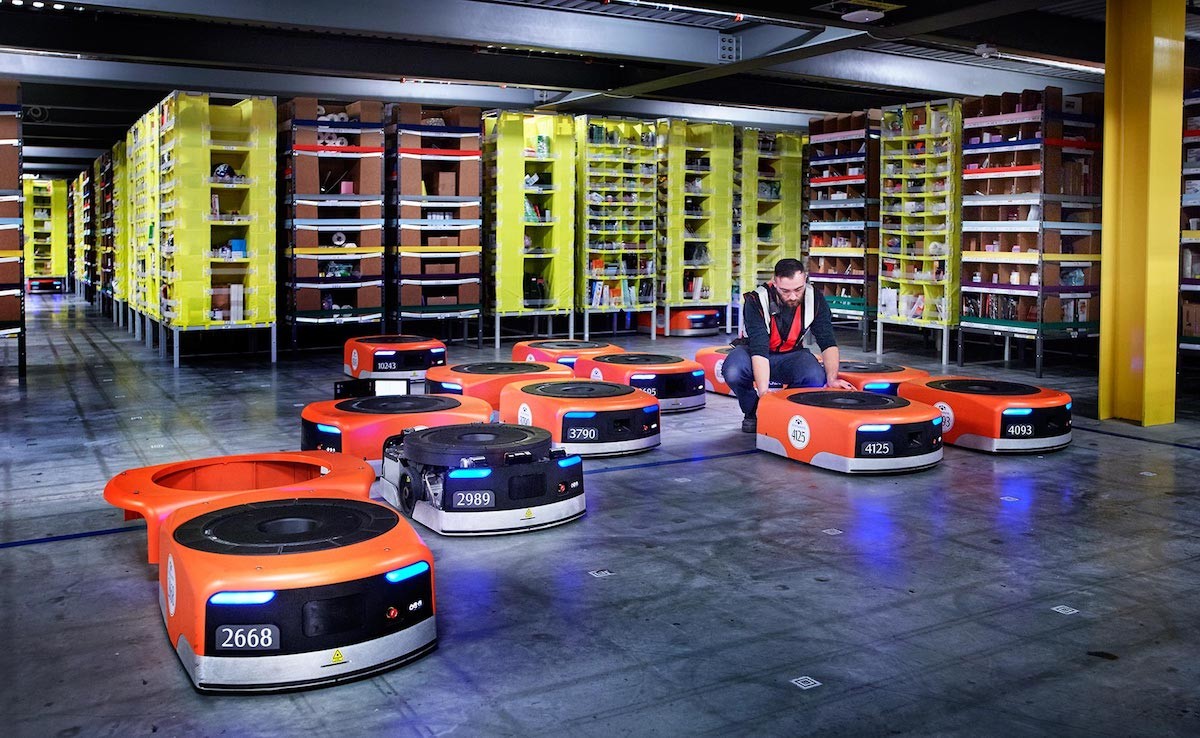
Did you know Amazon currently has a workforce of over 350,000 robots in their warehouses? I was recently reading an article by McKinsey on the challenges that traditional retail is currently facing with declining profitability, evolving consumer preferences, and the accelerating growth of e-commerce. Currently in the face of this, most retailers have taken a softly softly approach, underinvesting in future focused capabilities such as IT, digital, and tech talent.
The research found that a surprising 52 percent of retail activities could be automated, at least partially (exhibit below). The fact that over half of retail activities could be automated really hit home to me about the size of the prize in this space as a competitive advantage to not only become more operationally efficient but at the same time deliver a better customer experience.
The below visual from the report shows a cross section of industries, the types of tasks and % of automation potential. Whilst it shows retail still has a significant human element required in the “interface with others” (read my post on a consideration of charm), it shows there are a large number of data processing and predictable tasks that have automation potential – think customer order processing, product & promo pricing, inventory order forecast & management.

So how can Automation be put into practice for retailers? The report indicated three main areas of focus.
Step 1, review and simplify core business processes. Taking a customer first approach is key here, if you approach organising the business around what the customer wants you will always be led in the right direction. They found that process-redesign efforts here can see efficiency improvements in reducing steps by 20% to 30%. As an example, complex processes such as promotion management often involved more than eight steps and more than four teams, with opportunity to streamline with workflow tools. Workflow management tools can help to also smooth decision processes and simplify validation steps – with opportunity for 50% to 70% percent reduction in steps whilst maintaining nearly 100% accuracy
Step 2, automation. Once processes are simplified, retailers can look to build automation into them, at a basic level I’ve seen this done with robotic process automation (RPA) for manual tasks such as data entry and reporting. For example exporting orders and inputting them into a daily report format for the accounts team or re ordering low stock inventory. If you take it to the extreme you have Amazon’s example of automating the order pick process in their warehouses with 350,000 robots!
Lastly, add smarts with AI. This step can particularly improve the customer experience by allowing retailers to a scalable solution to deliver a more personalised experience. Beyond automating processes, this step requires “teaching” processes to learn and derive insights. AI can be applied in areas such as dynamic product selection, promotion, and pricing, where advanced analytics algorithms are increasingly used to analyse large sets of data – think Netflix or Spotify’s recommendation algorithm or Amazon’s dynamic pricing on site adjusted to market conditions.
With over half of retail tasks an opportunity for automation, there is significant opportunity for retailers to harness it not only to be more operationally efficient but deliver a better customer experience and in my experience, thinking customer first will always lead to down the right business strategy.
Alex Leece
What is Digital Product Marketing?
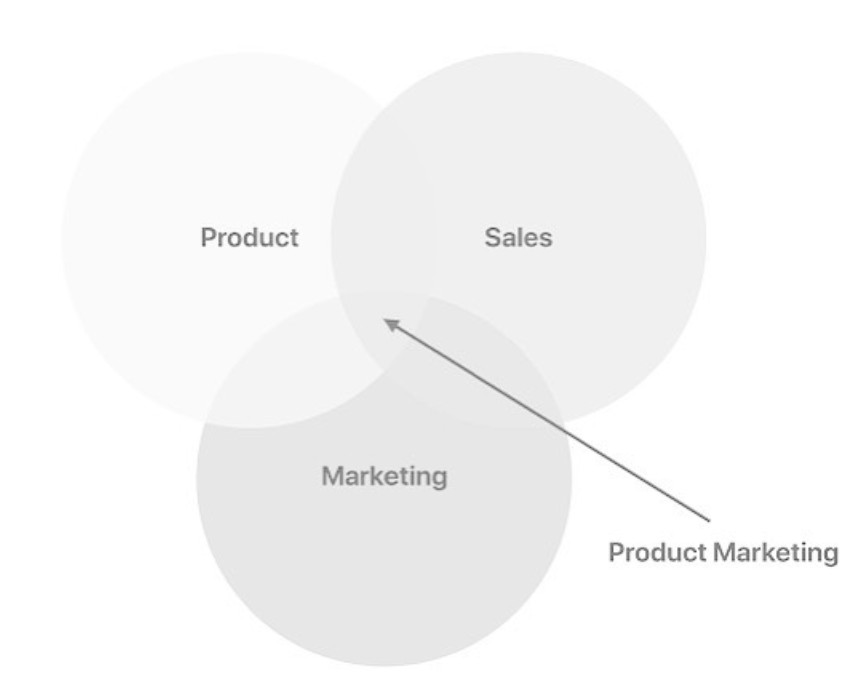
Although Product Marketing is growing as a discipline across both B2B and B2C digitally driven businesses, it’s challenging to find a clear definition of what the the role entails, even when you search on Google. So what is Product Marketing? Lets take a look.
In organisations, the role sits at the intersection of product, sales and marketing, meaning the role can have a large impact on growth — but also means that the role can be hard to clearly define.
In a nutshell, Product Marketers work with Product Owners and Sales Leads to define a products proposition and take it to market, driving it’s overall success in achieving product market fit, with a deep understanding of the customer.
To do this, Product Marketers need to have a broad marketing skill set ranging from strategic to technical, and have a focus on clearly articulating the products proposition, messaging and target customer groups, before they then stimulate demand and drive acquisition of these customers.
Product Marketing Starts with Proposition & Positioning
A great product goes nowhere if it doesn’t get the attention of the people who would love it. So Product Marketers start with research into, who’s going to be the audience for the product, how (and where) are you going to reach them, and what the best way to present the product to them will be.
An NBR article a year or so ago stated research that only .0025% of new products go on to achieve product market fit within the first three to five years of their life in NZ. This leads to significant waste, a loss of economic opportunity and is materially different to other countries, positioning is a tool that can have significant impact on improving this metric.
Often the key reason for businesses initially implementing Product Marketing support is to tackle this problem of market fit through positioning. A products positioning in market can have a huge impact on a businesses success or failure, as it immediately short cuts in the head of your customers who your competitive set is. For example, if you positioned your product as a generic enterprise management system you are competing with the Salesforce’s of the world, however if you positioned it as a niche real estate lead management system instead, despite perhaps having the same product feature set, you could dramatically increase the uptake of the product by enthusiastic customers through solving their specific need.
Great examples of this would be Tinder & AirBnb who both had to relaunch to their current brand positioning before seeing success in market – Tinder was initially called MatchBox “the flirting game”.
Product Marketers Grow Brand Through Customer Focused Go-To- Market Messaging
Product Marketers then lead the development of go-to-market messaging to ensure they present the right message in the right channel to the right customer group. They create the communications framework that gives products the edge in their market to get exponential returns on marketing spend.
Building a strong brand positioning baked into your messaging is a key driver for long term business profitability, it will be the wind in your sails across all facets of business activity. Research has shown that brand affinity to be the second largest driver of purchase decision after price, as reflected in this chart from Millward Brown mapping the share performance of the BrandZ 100 top brands out performing the S&P. 500 2006 to 2008.

As well as messaging, it is also crucial that the product experience lives up to the story you tell in the market, in the digital age, brand and product are being brought closer together then ever before. The way the customers engage with your product is a crucial code in developing your brand. Not only the feature set but the engagement communications around the product and the way the product looks in terms of design, needs to reflect the positioning in market.
Product Marketers Acquire Customers Through Targeted Performance Marketing
Product Marketer’s typically leverage growth marketing techniques with targeted digitally driven advertising to customer groups. They aim to drive measurable acquisition & retention of customers to a product in the most efficient way possible as the product they are marketing is typically at start up or scale up stage where funds are tight and broadcast marketing techniques are not possible.
More then ever they are spearheading usage of AI & Data Driven marketing technology platforms to maximise the return on ad spend. This combination of brand and performance marketing brought together by Product Marketers is unique to the discipline, and incredibly powerful for gaining market share for products.
Finally, Product Marketing vs Product Ownership
An often asked question, what is the difference between Product Marketing & Product Ownership?
In a nutshell:
A Product Owner’s job is to create and develop new products and features, Product Marketing’s job is help define them and to bring them to market.
References:
https://www.nbr.co.nz/article/how-make-kiwi-smes-world-storming-fr-p-216825
Hyper Local, Hyper Annoying?
 Imagine a future where we are constantly bombarded by notifications as we wander down the road using our mobiles, innocently passing by shops. Now imagine just how frustrating that could be if not managed carefully. To quote a recent tweet from R/GA, if this is the future of location-relevant advertising, I’ll stick with my trusty Sunday circular, thank you very much.
If not done carefully, these types of things appear more like an attempt to ride the wave of social media than an opportunity to deliver a truly charming customer experience that returns any real long term sales.
At first these ideas seem logical, target people who are already instore with an offer as they are already there in a shopping mindset. However unless executed with care, I feel it will do more to irritate people then actually sell to them.
Advertising is a blunt instrument, we focus on such a granular segmentation at our peril.
There is a fine line between spam & information, we must take take to intelligently use the growing quantity of data we have available on our customers and deliver messages that are relevant and on brand or up comes the spam filter!
Mobile & The Automotive Industry
 I recently spoke at an IAB NZ Mobile Marketing seminar on our learnings around mobile in the automotive industry and thought I’d write a post on the points I talked to.
Vehicles are a high value purchase and as such the research phase of the purchase is quite drawn out, with people consulting many different sources. Online platforms are becoming a large part of this, whether it’s Google, manufacturers websites or various auction sites, people do their research before stepping onto the dealers lot. These platforms are great as they allow us to serve up a depth of information on the cars in a visual and engaging way and deliver experiences that can’t be had anywhere else.
Now there is no doubt that people are adapting to living in a more connected and mobile world and changing their behaviours as such. The old context of someone leaning forward in front of a computer is changing as the new context sees mobile connectivity and a wide variety of devices allowing people to delve in and out of content when and where they want. This is especially prevelant in the automotive industry, as our brands are omnipresent. People are constantly exposed to vehicles driving by, billboards and our above the line advertising, so for people with a keen interest such as influencers and early adopters, any brand exposure could cause them to want to search for information. The mobile is the only device that will always be with them when this occurs. In short, it’s that theory of always on retail – we want people to have a positive experience of the brand when & where they want it.
As expected we have been seeing a marked increase in traffic to our website via mobile over the last 12 months and it’s important to deliver these people the key information they want in an easy to use way that is optimised for the device they are experiencing it on. Whilst mobile is still a fractured market both in terms of hardware and software, there are clearly two stars at this point in iOS and Android, followed by the rest. In terms of development this means you can narrow your focus for crucial platform support. It will be interesting to see how the market evolves and consolidates over time. Much like when the internet was in it’s infancy, once a few players gain scale it will be easier to manage delivering content.
So once we’d identified we needed to be in the mobile space, we began by looking at what were the most important functions for a potential vehicle buyer whilst on the go and identified:
-model information
-booking a test drive
-finding a dealer
-roadside assist
-special deals
We wanted to ensure we were delivering the most important features whilst maintaining a rich experience & depth of information in a mobile optimised format.
To help with conversion even further we can use them to connect people with Mazda and our dealer networks to drive enquiries and test drives.
The recession has caused an increased trend in price competitiveness through incentivised pricing, which has bred a new value conscious shopper who is careful to compare prices to make sure they are getting the best deal. This has meant that people are increasingly comparing prices at the pointing end of the path to purchase and the mobile is the most convenient and ever present device to do this with. This extends to instore comparisons at a dealer level, people may be checking out a car and want to compare another or simply find out further information on the car they are looking at.
Finally, it’s become clear that using digital and mobile platforms we can extend the content available to people across all our other media for qualified leads.
Alex
Innovation Ecosystems

Frank Gehry - Disney Concert Hall by Julius Shulman and Juergen Nogai
When Frank Gehry was designing the Disney Concert Hall, he considered how the building would interact with the Dorothy Chandler Pavilion adjacent and adjusted the design accordingly. I recently came across a comment in the Financial Times in an article by Ron Adner that cemented the sentiment behind this in my mind. It’s not enough to simply manage your innovation, you must manage your ‘innovation ecosystem’ also. Essentially it’s all to easy to focus on the outcome of what you are trying to produce and forget to consider how it interacts with people and the world around it.
In his book, Ron Adner examines this phenomenon that causes many companies to fail “because they focus too intensely on their own innovations, and then neglect the innovation ecosystems on which their success depends.” This single minded execution focus is inward looking, involving the standard processes of linking strategy and operations, bringing teams together, looking at competitors and their value propositions. It is seen as good business practice, which it is, however it can create a blind spot that hides key dependencies that are equally important in determining success or failure. As technology causes our world to become increasingly connected and interdependent, this problem becomes exacerbated. For example with much of the marketing content we produce we now need to consider, how will people be viewing the content, where will they be, how will they share it, who will they share it with and most importantly how will they know it is there.
Obviously completing the project is still the core focus however Ron Adner suggests two other areas to consider to help take a broader view of the innovation ecosystem. Firstly, consider who else may need to innovate to activate your product. This has two sides, one the business side, in terms of production and delivery of the product and two, the consumer side in terms of using the product. For example with mobile advertising, to truly make the most of what you are creating you may require significant smart phone penetration or upgrades in mobile phone handsets. Secondly look at who else needs to adopt the product to deliver it to the end user, who do you need to sell it in to and who needs to support it to deliver it to market. This naturally has more of a business focus, however with many digital innovations these days, there is an element of connectivity and sharing, which may mean you require a critical mass of a few key influencers adopting the product before its value is fully realised.

Innovation Ecosystem
It’s easy to fall into the trap of execution focus, especially when we are faced with tight deadlines. However I think the take out here is that, taking a moment to consider a broader view and looking at the entire ecosystem rather than simply what needs to be done to complete the project may change how you approach things. It may change how you choose to bring it to market or what you prioritise in terms of the product features. It may even help you to identify new opportunities or threats and adjust how you measure the success of the project. This isn’t a new idea, but it’s one that’s important to remind ourselves of.
Alex
Reference: The Wide Lens: A New Strategy for Innovation by Ron Adner
Innovation & The Connected Mind

Innovation. A term often bandied around and something that all forward thinking companies strive to deliver in spades. The question is, how can companies take advantage of this elusive trait, is it something a person is born with or is it something that a company can cultivate as a product of the cultural environment? If the environment does indeed play a part, then increasingly how might the use of digital technology to connect ourselves and our ideas effects this process?
When you first consider the term innovation, you may be forgiven for thinking that it concerns a moment of great insight, which happens with people who are inherently “innovative”. It’s a term that has alot of myths attached to it. I came across the below table from an HBR Article which addresses these quite nicely.
Innovation Myths
|
Myth
|
Reality
|
|---|---|
| Innovation is random | Innovation is a discipline — it can be measured and managed. Consider how Procter & Gamble’s structured approach to innovation allowed it to triple its innovation success rate and double the size of a typical initiative. |
| Only creative geniuses can innovate | Innovation is distinct from creativity. While creativity can help, people who aren’t intrinsically creative can create high-impact innovation if they follow the right process. |
| You’re either an innovator or you’re not | Research recounted in The Innovator’s DNA described how innovation is about 30 percent nature and 70 percent nurture. |
| Innovation happens in the R&D lab | Innovation — something different that has impact — can happen anywhere in an organization. Everyone should be looking for new ways to solve old problems. |
| We will win with superior technology | Most market disruptions rest on innovative business models — new ways to create, capture, or deliver value |
| Innovation is all about improved performance | Sometimes innovation is about improving performance along traditional dimensions, but some of the most powerful disruptive innovations sacrifice raw performance in the name of accessibility or affordability.* |
| Our customers will be a critical source of innovation insight | Your customers might tell you how to make your current offering better, but they won’t point the way to disruptive growth; you have to explore new markets in new ways to identify new growth businesses. |
| Game changing innovation is done only by entrepreneurs | Many of the most exciting disruptions in recent years — such as GE’s low cost imaging solution and Cisco’s TelePresence solution — have come from big companies |
| We will win by targeting the biggest markets | Markets that don’t exist are difficult to precisely measure or analyze; the most powerful innovations create new markets. |
| Innovation requires big bets | As our friend Peter Sims writes in Little Bets, if you want to win big, you should start small. |
The couple of points that really stood out for me here is that there is an aspect of nuture involved in innovation and that it is something that can occur throughout the company, not just in the R&D lab. This suggests that it is certainly something a company can cultivate and can be driven by anyone across the business at any time. How can businesses use this to their advantage? There has been a recent proliferation of new titles in our industry involving innovation, Chief Innovation Officer, Director of Innovation and the list goes on. Whilst these may seem like invented positions to try to convey a sense that the company is innovative, I believe that companies need people on the fringe who push forward new thinking. This often means they isolate themselves from others resistant to change, being at the forefront can be a lonely place to be. People like this can really help to drive new thinking over time by stirring the pot and provoking discussion. More then this though, ensuring companies support people to pursue new ideas and realising that they can come from anyone at any time is crucial.
Further to this, from an environmental point of view, in an age of increasing connectivity within the company through digital technology, could this have a positive effect on innovation? This seems to be the case. I recently watch an interesting video by Stephen Johnson on Where Good Ideas Com From:
In it, he puts forward the concept of the “slow hunch”. This hypothesizes that most great ideas don’t come from a moment of great insight, but a slow building hunch that when combined with other peoples hunches creates a new concept or innovation. This suggests that digital technology allowing us to interact in real time with people quickly and easily to share ideas may have a positive effect on innovation. Twitter is a good example of this idea sharing in action, people all around the world collaborate around topics and share their ideas. Essentially being constantly connected creates faster feedback loops between people allowing ideas to bounce off each other at a faster rate.
It will be interesting to see how this plays out in future as much like Moore’s, Kryder’s & Gilder’s laws see an increasing rate of change in technology, so to may this apply to the new ideas that spring from it.
Alex
CES 2012 Trends & BBDO Digital Labs Round Up
 CES is held every year in Las Vegas, where the worlds leading innovators in technology gather to showcase their new products and share their vision for the future. This year was no different and BBDO Digital Labs TV was on hand to report live with key figures in the technology industry. I thought I’d put together a summary of some key trends from the event and round up the Digital Labs TV coverage.
Trends
-Smarter TVs: Simplicity of control was a theme here, with the latest models featuring voice commands, gesture controls and even facial recognition. This is made possible with increased processor power & built in cameras & microphones. These more intuitive gestures make accessing apps & services a much easier prospect.
– Improved Screen Technology: Thinner, larger & with higher detail then ever before. Sony for example, unveiled a Crystal LED display which has 4 times the detail of current HD.
-Ultrabooks: These thin, light & instant on machines were popular among manufacturers. Netbooks on steroids, the standouts were the HP Envy Spectre & the Lenovo Yoga.
-Mobile: A number of smart phones were announced, including Intel’s first foray into the market. Smart phones are clearly a growing area as mobile network speeds continue to increase. Could 2012 be the year of 5G?
-Networking: Wireless technologies & networks were of interest, with some products showing off concepts of islands of 60ghz network connectivity around your TV for example, allowing super fast speeds within that room, then tapering off around the rest of the house.
BBDO Digital Labs TV CES 2012 Coverage Round Up
The Value Of Proximity
 Technology is allowing people to become more and more connected via social and mobile networks. These connections span from people in their locality right through to people on the other side of the world. This growing number of connections can create alot of noise and we do start to see marginal disutility within the social network as the connections become less valuable to the person. Traditionally, we were only able to foster connections with those in close physical proximity but what role does proximity now play as the world becomes increasingly open.
As a lens of looking at this issue, I came across the principles of Gestalt psychology. This theory is based around the concept that the brain is holistic, parallel, and analogue, with self-organizing tendencies which affect how we perceive things around us. Proximity is one of the grouping principles that this theory is based on and it occurred to me that it may relate to how we subconsciously self-organise our networks. The principle states that, all other things being equal, we perceive stimuli that are close together as part of the same object, and stimuli that are far apart as two separate objects. This simplifies things in our mind and reduces the number of small stimuli we need to process. Whilst this theory does most typcially apply to visual perception, focusing on the idea of our brain having a tendency towards self-organizing, it may not be too much of a stretch to consider physical proximity to be a grouping factor we use in organising networks to reduce noise.
Therefore as a way of coping with the growing amount of connection noise we experience, we may start to see people subconsiously group those people that are in close physical proximity together. They then may devote more attention to this group, allowing them to cope with the excess of less valuable connections within the network. We would of course be more likely to interact with these people on a regular basis and the effect may be exacerbated by the fact that content is becoming more and more tailored to what we are more likely to engage with (take Facebooks top stories timeline for instance). This would mean that proximity plays a role in the value of a connection as the closer you are to the other person, the more likely this connection will be on your radar. I know I spend alot more time interacting with my friends that I see on a regular basis than any others. So what does this mean for the reality of how much more utility we gain as the world becomes more connected, do we get as much value from the long distance connections as we do the local ones?
It’s not a new concept that proximity fosters valuable relationships among people, especially when considered in the work environment. A recent research paper gave some credence to just how much of an impact it can actually have (see reference link below). An analysis of a decade of Harvard biomedical research collaborations, found that the closer the proximity of the offices of key research partners, the more influential their joint papers were likely to be. It mattered whether collaborators were walking down the same corridors through the office, or eating at the same cafes. It seemed to be that the presence of physical collaboration through closer proximity produced better work from the team, despite on the surface being able to communicate just as efficiently over long distance via technology. The continued importance of location may seem unnecessary with the advent of Skype, smart phones, and other technologies that make it effortless and inexpensive to collaborate with people around the world, but location still seems to matter. Being able to communicate across distances means we can do alot of different things more efficiently but face to face contact and proximity is still important as the noise from our connections increase and it simply can’t replace personal interaction.
Whilst technology is allowing us to become more connected and break down geographic barriers, I believe that proximity may still play a role in how we organise our networks (even if only subconsciously) and can be an indicator of the value that a connection provides.
Alex
Reference
Lee K, Brownstein JS, Mills RG, Kohane IS (2010) Does Collocation Inform the Impact of Collaboration? PLoS ONE 5(12): e14279. doi:10.1371/journal.pone.0014279
http://www.plosone.org/article/info:doi/10.1371/journal.pone.0014279
 // Rebuilding_Creativity