// Rebuilding_Creativity
product marketing
What is Digital Product Marketing?
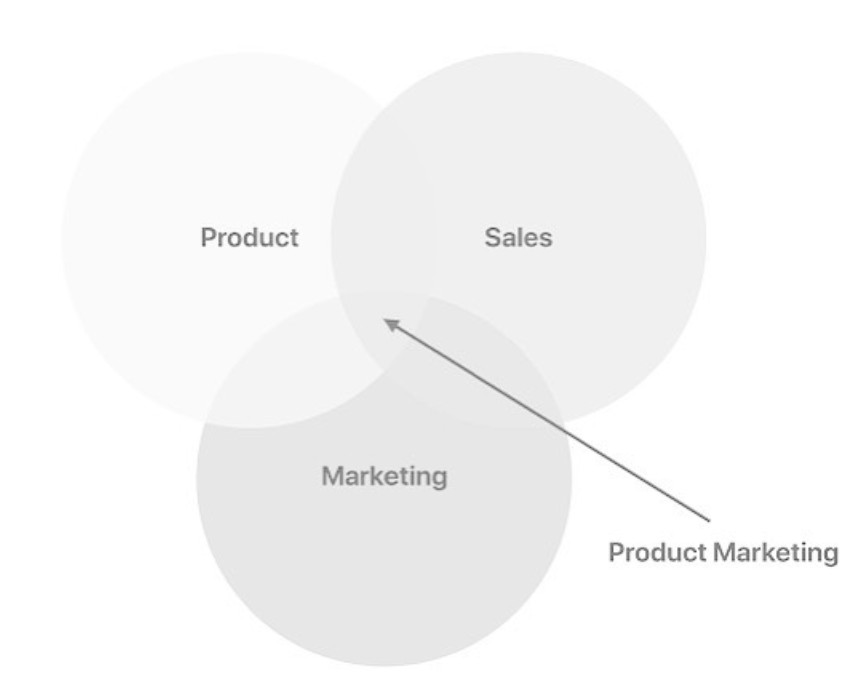
Although Product Marketing is growing as a discipline across both B2B and B2C digitally driven businesses, it’s challenging to find a clear definition of what the the role entails, even when you search on Google. So what is Product Marketing? Lets take a look.
In organisations, the role sits at the intersection of product, sales and marketing, meaning the role can have a large impact on growth — but also means that the role can be hard to clearly define.
In a nutshell, Product Marketers work with Product Owners and Sales Leads to define a products proposition and take it to market, driving it’s overall success in achieving product market fit, with a deep understanding of the customer.
To do this, Product Marketers need to have a broad marketing skill set ranging from strategic to technical, and have a focus on clearly articulating the products proposition, messaging and target customer groups, before they then stimulate demand and drive acquisition of these customers.
Product Marketing Starts with Proposition & Positioning
A great product goes nowhere if it doesn’t get the attention of the people who would love it. So Product Marketers start with research into, who’s going to be the audience for the product, how (and where) are you going to reach them, and what the best way to present the product to them will be.
An NBR article a year or so ago stated research that only .0025% of new products go on to achieve product market fit within the first three to five years of their life in NZ. This leads to significant waste, a loss of economic opportunity and is materially different to other countries, positioning is a tool that can have significant impact on improving this metric.
Often the key reason for businesses initially implementing Product Marketing support is to tackle this problem of market fit through positioning. A products positioning in market can have a huge impact on a businesses success or failure, as it immediately short cuts in the head of your customers who your competitive set is. For example, if you positioned your product as a generic enterprise management system you are competing with the Salesforce’s of the world, however if you positioned it as a niche real estate lead management system instead, despite perhaps having the same product feature set, you could dramatically increase the uptake of the product by enthusiastic customers through solving their specific need.
Great examples of this would be Tinder & AirBnb who both had to relaunch to their current brand positioning before seeing success in market – Tinder was initially called MatchBox “the flirting game”.
Product Marketers Grow Brand Through Customer Focused Go-To- Market Messaging
Product Marketers then lead the development of go-to-market messaging to ensure they present the right message in the right channel to the right customer group. They create the communications framework that gives products the edge in their market to get exponential returns on marketing spend.
Building a strong brand positioning baked into your messaging is a key driver for long term business profitability, it will be the wind in your sails across all facets of business activity. Research has shown that brand affinity to be the second largest driver of purchase decision after price, as reflected in this chart from Millward Brown mapping the share performance of the BrandZ 100 top brands out performing the S&P. 500 2006 to 2008.

As well as messaging, it is also crucial that the product experience lives up to the story you tell in the market, in the digital age, brand and product are being brought closer together then ever before. The way the customers engage with your product is a crucial code in developing your brand. Not only the feature set but the engagement communications around the product and the way the product looks in terms of design, needs to reflect the positioning in market.
Product Marketers Acquire Customers Through Targeted Performance Marketing
Product Marketer’s typically leverage growth marketing techniques with targeted digitally driven advertising to customer groups. They aim to drive measurable acquisition & retention of customers to a product in the most efficient way possible as the product they are marketing is typically at start up or scale up stage where funds are tight and broadcast marketing techniques are not possible.
More then ever they are spearheading usage of AI & Data Driven marketing technology platforms to maximise the return on ad spend. This combination of brand and performance marketing brought together by Product Marketers is unique to the discipline, and incredibly powerful for gaining market share for products.
Finally, Product Marketing vs Product Ownership
An often asked question, what is the difference between Product Marketing & Product Ownership?
In a nutshell:
A Product Owner’s job is to create and develop new products and features, Product Marketing’s job is help define them and to bring them to market.
References:
https://www.nbr.co.nz/article/how-make-kiwi-smes-world-storming-fr-p-216825
 // Rebuilding_Creativity