// Rebuilding_Creativity
radio
The Curated Future Of News Radio
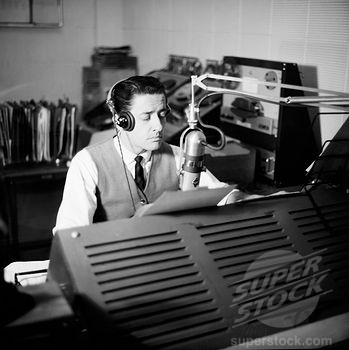 The digital content disruption continues. Whilst print media have been grappling with this for some time and the music industry has also been coming to terms with new forms of content distribution such as Spotify, it appears the next frontier of curation could be news & information content. Whilst this has typically been the domain of public radio, with a combination of location services and curated content from around the world we have started to see a new wave of applications which empower the user to curate their own news rather than rely on local radio to do it for them.
Early examples of this are Agogo and Swell. Recently launched, they pose a new challenge to traditional media outlets by creating new listening experiences for consumers of talk and news. They bring together segments of audio from news sites around the world into customizable and curated streams based around themes such as Business & Finance or Sports. Whilst they can also provide limited local information such as traffic reports based on location services, public radio still has the upper hand in terms of local content creation with the power of their own local journalists and talent. This is something that still gives public radio the upper hand for the moment – somebody needs to create the content in the first place.
However continuing the overarching trend of media money moving into digital, these types of platforms will no doubt over time see more of our traditional media money moved into digital and mobile whether they are independent apps or locally owned by networks, watch this space!
Alex
Musings On The Future Of Radio
We all know about the impact of smart phones, but what about smart cars. As cars become more and more digitally enabled, what does this mean for the future of how we advertise to people in this context and thereby radio?
Take the images in the slideshow above of the new 5 series BMW for example. Here we have a passenger who is able to browse the internet from the comfort of their vehicle. Perhaps catching up with their social networks via the likes of Facebook or Twitter or checking the latest news via their favourite website. Radio could potenitally be being streamed into an environment where people are not only a captive audience, but connected to the web just as they would be in the living room (or on the street with their smart phone for that matter). Moreover, if radio is being streamed digitally, does this open up the possibility of being able to interact with the live stream much like digital TV?
Computer technology is finding its way into all aspects of our physcial lives, creating new meaning and utility. I’d like to consider two key aspects of utility that could potentially be built upon by utilising technology in this space.
Convenience – delivering relevant information when & where you need it. It’s all about making it as easy as possible for people to get the product information they require in order to purchase. Whats for sale, where, and for how much. If for example you heard an ad for groceries which you were then able to interact with via voice or a computer screen, you could potentially seek out more details about the products and where your nearest store is to purchase them. Being able to do this instantly from the convenience of your vehicle may become natural as people get used to being “always on” and connected. Perhaps in future you’ll be able to purchase groceries whilst on the way home, during a radio ad and have them delivered to your door. Convenient.
Context – relevant information delivered in the correct context for the environment. Simon Bond (BBDO) made the argument earlier this year at Cannes that no screen is equal, we must tailor our messages to the individual platform. He also discussed how we view each platform differently, relating each to Jungs personality Archetypes (PCs for example as a Sage). With this in mind, I’d see radio as somewhat of an Explorer/Sage, assisting you make sense of your environment and imparting information that is relevant to you. To this end, digitally enhanced radio could become more hyper-local, transmitting content related to stores that you are driving past, alerting you to deals that are close by. Perhaps radio could be streamed to different target audiences by selecting the types of vehicles you wish to reach. This could be quite effective as the type of car people choose to purchase is often quite reflective of their personality also. Those who drive new Audis would most likely be interested in high end products for example.
Time to order my new car.
Alex
 // Rebuilding_Creativity