// Rebuilding_Creativity
rebuilding creativitiy
The Gen Z Shopper & Participation Branding
I was recently reading an article on Inside Retail about a report on “Gen Z” by Fitch which really crystallized for me a tangible indication of how the face of retail is changing and an insight into how we need to change our communication strategies to suit – in particular around the concept of Participation Branding and creating ideas that make the most of our bought, owned & earned media channels.
Gen Z, classed as those born after 1995 are hard wired to be cautious of standard marketing ploys and particularly happy to browse before making an informed purchase. A key finding from the report for me was that they demonstrated a “real gap between seeing & buying” enabled mostly by digital platforms such as social media, search or price comparison sites. Essentially the Gen Z shopper can go through a long period of what they termed “Aspirational Browsing” where they may set their sights on products far in advance of actually making a purchase. As agencies this means we need to change the way we communicate as the typical broadcast campaign based methodology is simply not going to be as effective in generating immediate sales with this audience and we need to be present across the omni-channel environment to take advantage of the long tail of our bought, owned and earned media online to ensure we get infront of them at the right time during this extended purchase funnel.
As they said in the report, “It’s all about keeping the brand and potential purchase front of mind during this extended aspirational browse period”. See the below diagram for a visual representation of this process, essentially digital platforms and connectivity enable the consumer to more easily discover, browse, buy and share then ever before.

The path to purchase for Gen Z. Source: Fitch
So how can we overcome or capture the interest of these people during this period of delayed gratification? We have to make sure that our messaging is spread across our digital brand ecosystem through our bought, owned & earned channels so that whilst we will have a big spike in activity across our campaign period, the content lives on so it will be there when and where our Gen Z consumer is browsing or ready to purchase. I recently attended a talk in which the idea of “Participation Branding” was presented, which reflects how we can change our communication strategies to suit this extended period of digital browsing. Participation branding was defined as the below:
“How a brand engages and behaves with consumers across channels and over time to earn their attention and participation through motivating stories and experiences.”
By weaving digital experiences into our campaigns we create an element of interactivity for our ideas which encourages participation by these digitally enabled shoppers. This means that we can actually harness this new shopping behaviour as a positive for our brands and use it spread our message across our brand ecosystem by engaging them through this period of aspirational browsing. In terms of our approach it’s simply just adding another set of tools to our arsenal on top of brand marketing & direct response in the form of social influence marketing:
|
Participation Branding |
||
|
Brand Marketing
|
Direct Response Marketing |
Social Influence Marketing |
By ensuring we use media neutral ideas that propogate digital content and experiences across our bought, owned & earned channels, we start to rally participation and engagement in the brand which builds a digital trail of content or “brand ecosystem” over time. This allows us to take advantage of the long tail of this content by having it live on after the campaigns which means it will be there in the consideration set when the Gen Z shopper is browsing or comparing to make sure we are top of mind – whether it’s during the campaign period or months after when they are looking to purchase. See below a chart from the same presentation which shows how the spikes of campaigns help to build our overall ecosystem over time.
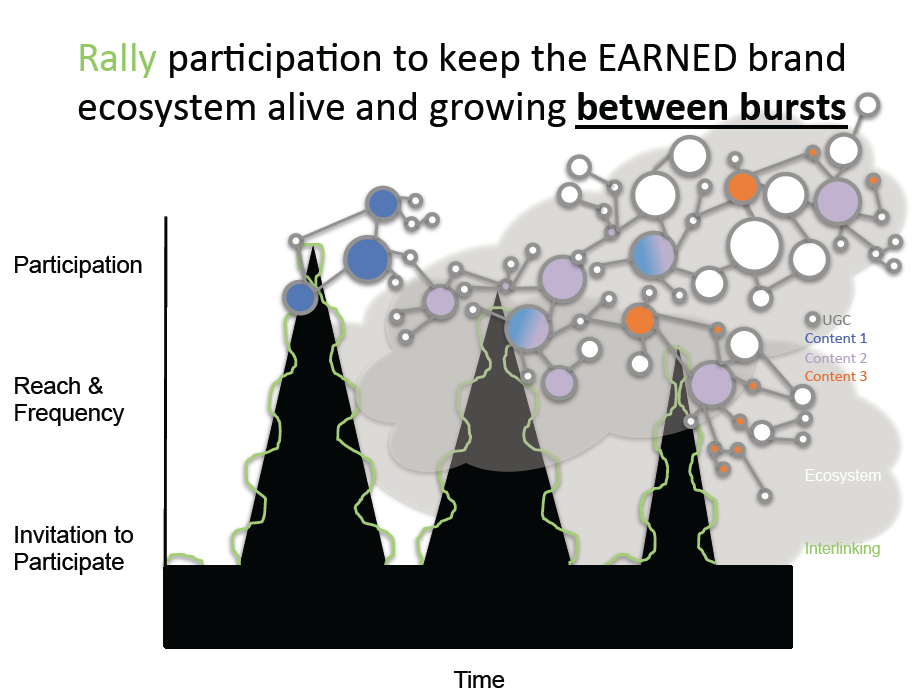
Source: Heather Albrecht of Digital Connections Pty Ltd http://www.digitalconnec6ons.com.au
It’s an exciting time to be in both the retail and communications businesses, the way people consume media and even the way they browse and shop is changing as fast as technology allows. However as long as we continue to create engaging ideas that get infront of the right people at the right time, we will continue to see results – some things never change!
Author: Alex Leece
Mobile & The Automotive Industry
 I recently spoke at an IAB NZ Mobile Marketing seminar on our learnings around mobile in the automotive industry and thought I’d write a post on the points I talked to.
Vehicles are a high value purchase and as such the research phase of the purchase is quite drawn out, with people consulting many different sources. Online platforms are becoming a large part of this, whether it’s Google, manufacturers websites or various auction sites, people do their research before stepping onto the dealers lot. These platforms are great as they allow us to serve up a depth of information on the cars in a visual and engaging way and deliver experiences that can’t be had anywhere else.
Now there is no doubt that people are adapting to living in a more connected and mobile world and changing their behaviours as such. The old context of someone leaning forward in front of a computer is changing as the new context sees mobile connectivity and a wide variety of devices allowing people to delve in and out of content when and where they want. This is especially prevelant in the automotive industry, as our brands are omnipresent. People are constantly exposed to vehicles driving by, billboards and our above the line advertising, so for people with a keen interest such as influencers and early adopters, any brand exposure could cause them to want to search for information. The mobile is the only device that will always be with them when this occurs. In short, it’s that theory of always on retail – we want people to have a positive experience of the brand when & where they want it.
As expected we have been seeing a marked increase in traffic to our website via mobile over the last 12 months and it’s important to deliver these people the key information they want in an easy to use way that is optimised for the device they are experiencing it on. Whilst mobile is still a fractured market both in terms of hardware and software, there are clearly two stars at this point in iOS and Android, followed by the rest. In terms of development this means you can narrow your focus for crucial platform support. It will be interesting to see how the market evolves and consolidates over time. Much like when the internet was in it’s infancy, once a few players gain scale it will be easier to manage delivering content.
So once we’d identified we needed to be in the mobile space, we began by looking at what were the most important functions for a potential vehicle buyer whilst on the go and identified:
-model information
-booking a test drive
-finding a dealer
-roadside assist
-special deals
We wanted to ensure we were delivering the most important features whilst maintaining a rich experience & depth of information in a mobile optimised format.
To help with conversion even further we can use them to connect people with Mazda and our dealer networks to drive enquiries and test drives.
The recession has caused an increased trend in price competitiveness through incentivised pricing, which has bred a new value conscious shopper who is careful to compare prices to make sure they are getting the best deal. This has meant that people are increasingly comparing prices at the pointing end of the path to purchase and the mobile is the most convenient and ever present device to do this with. This extends to instore comparisons at a dealer level, people may be checking out a car and want to compare another or simply find out further information on the car they are looking at.
Finally, it’s become clear that using digital and mobile platforms we can extend the content available to people across all our other media for qualified leads.
Alex
 // Rebuilding_Creativity