// Rebuilding_Creativity
Retail
Automation in Retail – The Next Competitive Advantage?
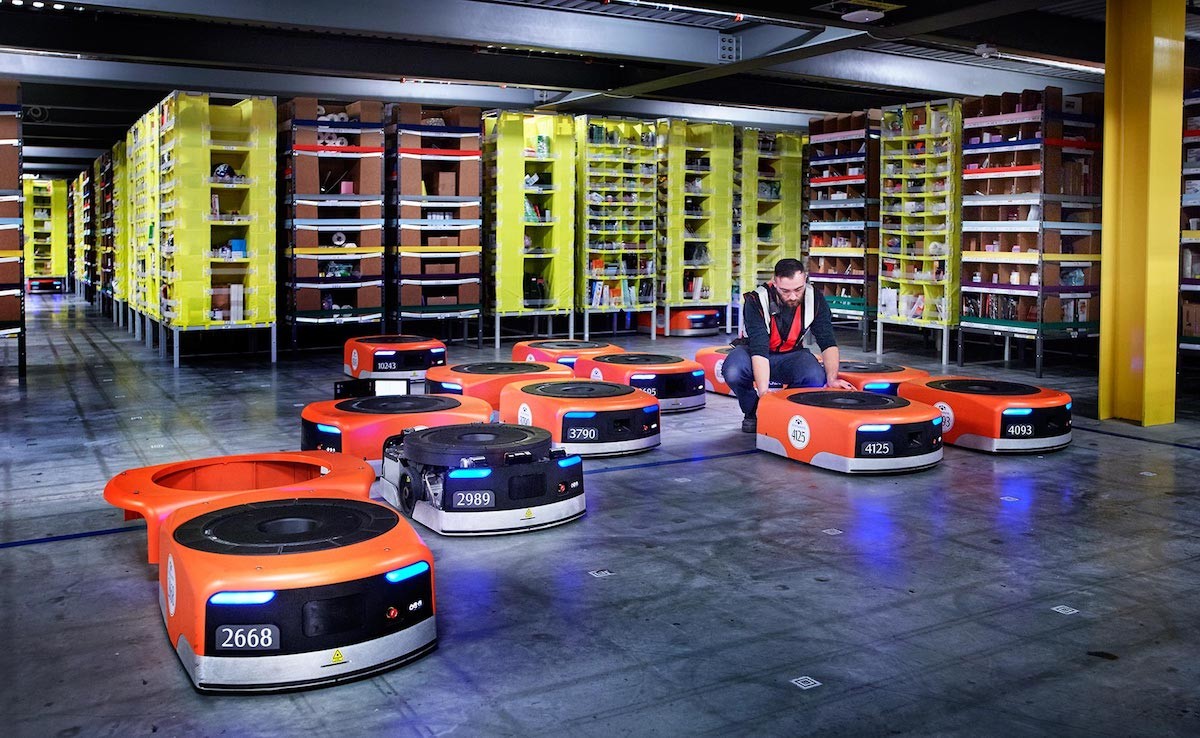
Did you know Amazon currently has a workforce of over 350,000 robots in their warehouses? I was recently reading an article by McKinsey on the challenges that traditional retail is currently facing with declining profitability, evolving consumer preferences, and the accelerating growth of e-commerce. Currently in the face of this, most retailers have taken a softly softly approach, underinvesting in future focused capabilities such as IT, digital, and tech talent.
The research found that a surprising 52 percent of retail activities could be automated, at least partially (exhibit below). The fact that over half of retail activities could be automated really hit home to me about the size of the prize in this space as a competitive advantage to not only become more operationally efficient but at the same time deliver a better customer experience.
The below visual from the report shows a cross section of industries, the types of tasks and % of automation potential. Whilst it shows retail still has a significant human element required in the “interface with others” (read my post on a consideration of charm), it shows there are a large number of data processing and predictable tasks that have automation potential – think customer order processing, product & promo pricing, inventory order forecast & management.

So how can Automation be put into practice for retailers? The report indicated three main areas of focus.
Step 1, review and simplify core business processes. Taking a customer first approach is key here, if you approach organising the business around what the customer wants you will always be led in the right direction. They found that process-redesign efforts here can see efficiency improvements in reducing steps by 20% to 30%. As an example, complex processes such as promotion management often involved more than eight steps and more than four teams, with opportunity to streamline with workflow tools. Workflow management tools can help to also smooth decision processes and simplify validation steps – with opportunity for 50% to 70% percent reduction in steps whilst maintaining nearly 100% accuracy
Step 2, automation. Once processes are simplified, retailers can look to build automation into them, at a basic level I’ve seen this done with robotic process automation (RPA) for manual tasks such as data entry and reporting. For example exporting orders and inputting them into a daily report format for the accounts team or re ordering low stock inventory. If you take it to the extreme you have Amazon’s example of automating the order pick process in their warehouses with 350,000 robots!
Lastly, add smarts with AI. This step can particularly improve the customer experience by allowing retailers to a scalable solution to deliver a more personalised experience. Beyond automating processes, this step requires “teaching” processes to learn and derive insights. AI can be applied in areas such as dynamic product selection, promotion, and pricing, where advanced analytics algorithms are increasingly used to analyse large sets of data – think Netflix or Spotify’s recommendation algorithm or Amazon’s dynamic pricing on site adjusted to market conditions.
With over half of retail tasks an opportunity for automation, there is significant opportunity for retailers to harness it not only to be more operationally efficient but deliver a better customer experience and in my experience, thinking customer first will always lead to down the right business strategy.
Alex Leece
Hyper Local, Hyper Annoying?
 Imagine a future where we are constantly bombarded by notifications as we wander down the road using our mobiles, innocently passing by shops. Now imagine just how frustrating that could be if not managed carefully. To quote a recent tweet from R/GA, if this is the future of location-relevant advertising, I’ll stick with my trusty Sunday circular, thank you very much.
If not done carefully, these types of things appear more like an attempt to ride the wave of social media than an opportunity to deliver a truly charming customer experience that returns any real long term sales.
At first these ideas seem logical, target people who are already instore with an offer as they are already there in a shopping mindset. However unless executed with care, I feel it will do more to irritate people then actually sell to them.
Advertising is a blunt instrument, we focus on such a granular segmentation at our peril.
There is a fine line between spam & information, we must take take to intelligently use the growing quantity of data we have available on our customers and deliver messages that are relevant and on brand or up comes the spam filter!
Mobile & The Automotive Industry
 I recently spoke at an IAB NZ Mobile Marketing seminar on our learnings around mobile in the automotive industry and thought I’d write a post on the points I talked to.
Vehicles are a high value purchase and as such the research phase of the purchase is quite drawn out, with people consulting many different sources. Online platforms are becoming a large part of this, whether it’s Google, manufacturers websites or various auction sites, people do their research before stepping onto the dealers lot. These platforms are great as they allow us to serve up a depth of information on the cars in a visual and engaging way and deliver experiences that can’t be had anywhere else.
Now there is no doubt that people are adapting to living in a more connected and mobile world and changing their behaviours as such. The old context of someone leaning forward in front of a computer is changing as the new context sees mobile connectivity and a wide variety of devices allowing people to delve in and out of content when and where they want. This is especially prevelant in the automotive industry, as our brands are omnipresent. People are constantly exposed to vehicles driving by, billboards and our above the line advertising, so for people with a keen interest such as influencers and early adopters, any brand exposure could cause them to want to search for information. The mobile is the only device that will always be with them when this occurs. In short, it’s that theory of always on retail – we want people to have a positive experience of the brand when & where they want it.
As expected we have been seeing a marked increase in traffic to our website via mobile over the last 12 months and it’s important to deliver these people the key information they want in an easy to use way that is optimised for the device they are experiencing it on. Whilst mobile is still a fractured market both in terms of hardware and software, there are clearly two stars at this point in iOS and Android, followed by the rest. In terms of development this means you can narrow your focus for crucial platform support. It will be interesting to see how the market evolves and consolidates over time. Much like when the internet was in it’s infancy, once a few players gain scale it will be easier to manage delivering content.
So once we’d identified we needed to be in the mobile space, we began by looking at what were the most important functions for a potential vehicle buyer whilst on the go and identified:
-model information
-booking a test drive
-finding a dealer
-roadside assist
-special deals
We wanted to ensure we were delivering the most important features whilst maintaining a rich experience & depth of information in a mobile optimised format.
To help with conversion even further we can use them to connect people with Mazda and our dealer networks to drive enquiries and test drives.
The recession has caused an increased trend in price competitiveness through incentivised pricing, which has bred a new value conscious shopper who is careful to compare prices to make sure they are getting the best deal. This has meant that people are increasingly comparing prices at the pointing end of the path to purchase and the mobile is the most convenient and ever present device to do this with. This extends to instore comparisons at a dealer level, people may be checking out a car and want to compare another or simply find out further information on the car they are looking at.
Finally, it’s become clear that using digital and mobile platforms we can extend the content available to people across all our other media for qualified leads.
Alex
Big Data & In Memory Computing

BT Tower - London - A Monument To The Broadcast Era
Big Data is a term coined to describe the data deluge we are currently experiencing. It’s no secret that we are living in a technology driven society that generates an ever increasing amount of data as we go about our daily lives. “Always on” is a term that is often heard and more often then not, when we are “on” we are creating data about ourselves, our likes and our dislikes, our network of friends both professional and social, and even our travel habits. At the same time, businesses must also retain more and more information to manage themselves more efficiently across the board. In tough economic times there is an ever increasing recognition that organisations must use every single resource at their disposal to get ahead. This results in information and data that once might have been given little attention is now seen as worth its weight in gold if any perceived value can be derived from it.
Looking at the sources of this data, to start with there is of course the sales, operational and customer data that the business collects. On top of this there’s social media data from the likes of Facebook and Twitter including information around friend groups, likes/dislikes and sentiment analysis. There’s web search data, with transactional information or online customer reviews. There’s also data generated by location-based services and data from sensors, moniters and GPS embedded in a growing array of products from vehicles to appliances. I believe if we as advertisors can offer solutions to our clients of how we can process and utilise the growing amount of data available to help inform creative business solutions we could offer real value. To quote a recent Financial Times article
“The challenges are two-fold: First, to recognize the value of big data in mining customer needs and desires, and second, to devise a data management strategy that integrates big data into the front end of the innovation pipeline.”
So how do businesses harness all the data that is being created and use it to inform their strategy and decision making? The challenge here is being able to process large amounts of data at speeds that make it useful. It’s very difficult to really make use of data in business decisions on an ongoing basis when it takes weeks to gather and process. Large software powerhouses such as SAP & Oracle have been bringing new tools to market for businesses to help solve this problem. In memory computing software is designed so organisations can analyse vast quantities of data in near real time across many sources. Essentially in-memory computing takes advantage of a better understanding of how data is formed and housed and the ever decreasing price of memory (discussed in my Technology vs Advertising post). Instead of housing data on a hard drive, data is stored in a computers memory. Therefore, when it needs to be analysed it is available in near real time. This increased power and speed also means that the computers can handle more unstructured data, important when data can come from so many different sources. On the back of this there would need to be a process for managing and delivering the data in an efficient manner and most importantly, in a way that is easy to understand and glean insights from.
Whilst I think caution must be taken not to let our ability to measure granular details bog down the creative process, at the end of the day, the more you know about your customers and can integrate those insights into your business strategies the more likely they are to improve revenue, margins and market share. Who wouldn’t want that leg up over the competition?
Alex
A Consideration of Charm
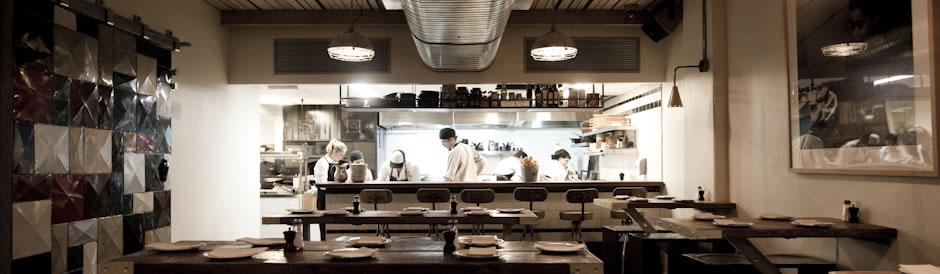
Depot Eatery by Al Brown - Auckland, New Zealand
Today I was reading an essay in the February edition of Monocle magazine on charm and it got me thinking about that elusive quality, that is so hard to quantify, yet can make all the difference to someones opinion of a place or service. As they pointed out, you will never hear someone say “I was I were less charming”. It’s a quality that can’t be easily replicated (bad news for competitors) and I believe really helps to give your business a special place in peoples minds. Take Depot Eatery pictured above, as soon as you arrive you feel the place has a character which is replicated in the unpretentious yet delicious food.
How can we as advertisers help to create content and instore experiences that help to cultivate this elusive trait? I believe it has to start at the ground level instore, where the customer is interacting with your business and you really have the opportunity to control a branded experience. Create a service experience that is friendly and warm, where the customer feels a personal touch. In a larger retail advertising sense this comes down to utilising CRM and Instore channels. Using CRM databases to customise content delivered to customers, you could send out personalised mailers to letterboxes, exclusive deals to mobile phones or deliver on screen prompts to sales staff of the customers favourite products when the customer is at the point of sale. Also consider the design space and fit out of the store carefully. No longer is it simply enough to erect some shelving and place products on it, expecting them to sell. When instore, this is a retail or service businesses big opporunity to sell the brand in an age when people roundly ignore a large portion of the advertising messages out there. Think on brand, engaging and personal, of course all the while remembering we are in the business of selling!
In terms of bringing the message above the line, as a brand you must be true and honest. This is nothing new in terms of branding strategy but I think now more then ever it is important for your busiess to have a clear value proposition. Be proud of the qualities of your business that can’t be faked or replicated. Are your products wholly sourced from quality producers or do you have the widest curated range of fashion available for convenient purchase? It is no longer simply enough to just decide what your product or service is about through mass market channels, people see through this. Brands must now constantly live their values, throughout all touch points with the consumer to truely deliver a memorable experience.
So next time when someone wanders in with a Powerpoint describing in detail the customer journey, take a minute to think about at what point you will be charming the pants off them!
Alex
The Future of Books
For a 1 year old, is a magazine simply an iPad that doesn’t work? Are we seeing a new generation for whom printed content is essentially broken? I just recently saw the above video on Youtube and it got me thinking about what the future will be for how we will read and consume content. Like I touched on in my Technology vs Advertising post, what we consider technology is predicated by the age in which we experience it. What is considered technology by us now will just be stuff to children who grow up exposed to it. With the release of the iPad, Apple essentially brought to the mainstream a new way to experience content and we are already seeing a change in behaviour as many newspapers struggle with a downturn in readership as people go online for their content on a daily basis. Also printed content is obviously alot more expensive and time consuming to create and produce so we are seeing not just a change in how we consume content but a change for how the industry creates and distributes it as well.
Tablet devices are already impacting upon how people consume content, with more and more people reading books and getting their information from them. I for one enjoy reading the Financial Times on their web app. Reading books and consuming content in this way opens up new opportunities for how we engage with it. About a year ago now, IDEO put together the below concept video illustrating three different concepts for how technology may change the experience of reading for people.
The Future of the Book. from IDEO on Vimeo.
Nelson: Contextualizes books within popular opinion and debate to provide reference and easy cross-checking of information
Coupland: Contextualizes books within your professional social network to make it easier to identify what’s worth reading
Alice: Adds a game layer to the experience of reading, in a sort of choose your own adventure meets geo-targeting scernario.
The key technology linking all the concepts together is that through the internet feeding tablets and mobile we are able to be constantly connected wherever we are which enhances how we find and consume content. New layers of utility can be added to the reading experience that couldn’t be before. As tablets become cheaper and a device for the masses, I believe this will be an area of significant growth. I do however feel there will be a place for printed books for a long time to come. I can see them becoming almost a luxury item such as many of the thriving printed magazines are these days. Since it will be alot more expensive to print a book, it will be left in the domain of the quality publications.
On the other side of the coin though there are wider reaching implications for the industry itself of digitalisation. Firstly, if you remove the printed nature of books, the definition of what one is becomes blurred somewhere between a tweet, an article and a 500 page novel. In the digital environment there aren’t the same parameters as there are in the printed world. Not only that but since the cost is lower and the whole process of producing content is faster, it puts pressure on the current distribution model. The traditional delay of up to a year between a books completion and publication was due to the work required to print, distribute and market but also allowed a means of stock control for retailers with the constraints of shelf space in their store. They needed to sell through one lot of books before they could take on more. Now books can be sold and distributed via the internet, it means book stores need to look at their business models and rearrange them.
What does this mean for the future of book stores? Much like I discussed in the Continuous Channel – Future of Retail post, people will always have a reason to go to stores but retailers will need to design them and consider the service offering as a whole with the online one. Not only does the online offering support the stores but allows the long tail of the back catalogue of books that aren’t held instore to be taken advantage of. I think we will end up with a situation where book stores will still have a place, but just a more specialised and service driven one. We are still seeing stores like WH Smith looking to triple their stores in air ports for example, capitalising on the sales of books in the moment when people need them. Whilst they will be supplying their e-book reader Kobo from this location, they will have a selection of paper backs too. They still currently see the e-reader as incremental to their paper back sales, as two thirds of their sales come from children’s books and non-fiction whereas 90% of all downloaded e-books are fiction (WH Smith plans to triple airport stores – FT.com).
Digitalisation of the book industry impacts not only how we as consumers experience the content but how the industry delivers it. Through the internet and new devices we are constantly connected with easy access to books and content, with new layers of utility added to them. For the industry it means a radical change in the distribution models and looking at their service offering, including an online product as part of it. All that said, there is still something about holding a good quality printed product on high quality stock in your hands.
Alex
The Continuous Channel – The New Retail Frontier?
 I recently watched a presentation by Steve Nave, former SVP & General Manager of Walmart.com and in it he raised the concept of the continuous channel as a new frontier for retailers. He talked about rather than seeing retail as a multi channel process, we should be taking a step back to look at the entire brand, letting customers shop the way they want to shop and bringing it all together into one continuous channel. Essentially instead of serving customers through individual channels, we serve them at touch points across channels by optimising the organisations processes and technologies. The picture on the left is a trial advertising program by Tesco in South Korea. In a “virtual store” concept, people could shop with their mobile phones whilst waiting for a train directly from an ambient installation set up to look like a store and have their groceries delivered to their home hours later. This is a great example of allowing shoppers to purchase in new ways, on their terms and across channels.
Traditionally there were only three channels which organisations could utilise to actively generate sales, the stores themselves, direct sales (phone/direct marketing) and printed catalogues. These channels essentially each only had a single touch point within them. This has now all changed with the advent of the internet and the establishment of ecommerce as a legitimate channel. The internet differs from the three traditional channels in that it doesn’t simply create one touch point but a vast array of new ones. It feeds emerging technologies as it expands into mobile, tablet, TVs, instore, cars and not to mention social media. The key thing to note here is that when you think about it, none of these new touch points are actually a new channel in themselves, they are all being fed by the existing internet channel. The opportunity here for retailers is that increasingly everything is becoming a touchpoint with which consumers can transact with your organisation. Whilst this may sound similar to the concept of multi-channel retailing, the difference is in the thinking of how the channels and touch points intersect together and how the organization responds to the customer across them to drive sales.
For this to work, information, and data must flow freely between channels on the customer end and within the business units of the organisation, no silos. Customers more and more expect to be able to shop across channels, for example purchasing an item via mobile and collecting it instore. They need to be able to shop when and how they want to, customers shop with your company as a whole, not with an individual channel. With this in mind we can look at new ways to intersect them. I think whilst it may be very hard to truly get to a point where this is fully achieved but it is a good journey to be on and will help drive retailing into the future.
The Walmart example that Steve discussed is a good one to look at in terms of a big retailer testing out initiatives which cross the channel boundaries. Walmart has implemented the below strategies with their ecommerce platform that go some way to letting the customer shop their way and intersects both instore and internet enabled channels:
Site to Store – customers could purchase products online and have them sent to their local store for collection.
Pick Up Today – customers can view a stores stock online, purchase and put it on hold knowing it’s ready for them when they arrive in store to collect it.
Scheduled Delivery From Store – customers can order something online from a store and schedule the delivery for when they want it to arrive at their home.
These strategies are interesting in not only do they cross the typical “channel” boundaries, but really add utility for the customer.
Looking forward, Steve identified the below future milestones he thought to be criticial to driving the continuous channel strategy going for Walmart:
–Social – not just in a setting up a Facebook page way but really looking at what the intersection is between business and social. They started an initiative called “Walmart Labs” to explore new technology around understanding what people are talking about in social media. With that insight, then as brands we can come to people and be relevant to them and the local community TODAY in new ways. For example we could use the information to influence what store staff talk to customers about when they enter the store, the POS instore, or what new initiatives stores can do for people. It’s about more then just sending emails of a relevant sale to people who have indicated they like blenders on Facebook.
-Mobile – This will help drive the continuous channel as a future for ecommerce. Customers are turning to mobile devices more and more for information when they want it quickly. To help keep pace in this area, Walmart are going so far as acquiring tech company start ups to remain agile and take advantage of the latest advances in technology.
-New Store Models – Can ecommerce begin to help influence store layout? Walmart are now siting the online division at the table when discussing how stores are designed to help bring online into the bricks and mortar channel. For example we don’t necessarily need the store floor space to show all products if we can back it up with online channels. For example you could show just 3 digital cameras in each price point, knowing 300 more are online which we can get to store for someone today, or to their home.
Whilst we won’t see the end of bricks and mortar stores, customers will always have something to do instore, (a point I touched on in my post Why Bricks and Mortar Stores Will Always Have a Role to Play) retailers will need to rethink their operational strategy to keep up with how consumers expect to be able to shop, on their terms, across channels.
Alex
Why Bricks and Mortar Stores Will Always Have a Role to Play

Tom Ford Store
I have recently been reading the excellent book, Why We Buy – The Science of Shopping by Paco Underhill. In it, he raised some points which really highlight to me the fact that bricks and mortar stores will always have a role to play in the retail environment. In my opinion it is unlikely that retail locations will be completely replaced by E-commerce, M-Commerce or F-Commerce, ever. To begin the discussion, lets look at defining shopping in a way that frames it as more than the simple acquisition of goods to fulfil a need.
Shopping: experiencing that portion of the world which is deemed for sale, using our senses of sight, touch, smell, taste or hearing as basis of the decision making process. (Ref. Paco Underhill)
The key message for me here is the neccessary sensory aspect is lacking in online retailing. Clearly you aren’t able to touch, smell or taste products without physically being instore. It is alot harder to truly understand the selling points of a product without being able to experience it fully. Take a look at shoppers as they wander round a store, picking things up, looking them over, taking them out of the pack, exploring and discovering. Further to this point, impulse purchases are often a result of touching and experiencing the product and indentifying the benefits it holds on the spot.
Merchandising can be just as powerful as advertising. For the most part we like to purchase based on trial and touch.
Why do we want to touch and experience things before we buy them? Firstly, for many products the tactile qualities of the product are a key selling point, such as luxury clothing from Tom Ford or manchester and linen. Even if the tactile qualities of the product don’t neccesarily require it be touched, they often still need to be experienced to get a feel for their benefits. Take technology products such as tablets, until you’ve had a go on one, flicking through some photos and articles, you really can’t tell how useful they really are.
So what else do stores offer that online retailing struggles to replicate?
Brand Experience: The instore environment can be tailored to deliver an incredibly strong brand experience, stronger then any press ad, TVC or web page. The store design and fit out, music, staff, location and surrounding stores all add up to deliver a message to people about your company and its values. Are you a high end store with exclusive location, plush interior and knowledgable staff or a discount retailer with a large store, bulk merchandising and convenient car parking? These choices alter how people perceive your company in a big way. Music also sets the tone of the environment, no self respecting teenager would shop in a store playing classical violin concertos.
Discovery: Instore you can create an environment which encourages discovery, exploring the store and experiencing the product. Sure this occurs on the internet naturally but instore it’s a much more experiential journey. Point of Sale which creates clarity of where you are in the store without oversaturating the information helps add to this. It sets the tone of the products around it but leaves the opportunity to explore the actual products in detail. For example using fashion imagery rather than text description of exact products. Sounds and smells can also be controlled, which can lead people through the store. Bakerys in supermarkets fill the store with the aroma of fresh bread, alluring you to discover and purchase the freshly baked bread.
Talking: Stores attract groups of people, if discussion can be fostered, the products begin to start selling themselves. If for example a group of girls are out looking for jeans, they will chat about the products and which looks best on each other, then perhaps running into friends and start getting their opinions also. This conversation my spread to the shoppers around them, bringing them in to the discussion. Sure it may be argued that this can be replicated to an extent online with F-Commerce (social shopping), but I don’t think it’s quite the same as the organic face to face conversation that can occur in a store environment.
Where does this leave online retailing to fit into the picture?
Obviously it will be a requirement for all businesses to offer their products online in some capacity in future if they wish to make the most of their revenue opportunities. I see it working in tandem with their retail locations. Bricks and mortar stores will be about delivering a strong brand experience for those who visit, allowing people to touch and experience the products in a controlled environment. Online retailing will then open a new avenue of sales rather than canabalising stores. Those that aren’t able to reach your physical stores perhaps due to location or lack of time, are able to purchase. It’s also great for making convenient repeat purchases on products you are already familiar with or low involvement purchases such as groceries. The convenience of being able to shop from a laptop, mobile or tablet, 24/7, 7 days a week is something people will come to expect and is an opportunty for retailers especially considering online stores don’t require staffing to be open and don’t have the same cost overheads.
Online retailing also allows retailers to take advantage of The Long Tail, a theory by Chris Anderson that there is actually more money in the “non-hits” rather than the “hits” as there is a substantially larger amount of them. It is too expensive for a bookstore for example to stock on a shelf a 15 year old book on the history of extinct moth species, filling them instead with the latest Harry Potter. However since online it costs nothing to have it available and you may actually sell one or two a year, add all these “non-hit” purchases up and you have a large revenue stream.
Technology is affecting the way retailers are doing business just as it is effecting the way we advertise to people but I don’t think there will ever be a substitute for the good old fashioned retail outlet.
If you’re interested in reading Why We Buy, you can purchase the book here: http://www.amazon.com/Why-We-Buy-Science-Shopping/dp/0684849143
Alex
 // Rebuilding_Creativity