// Rebuilding_Creativity
Social
The Gen Z Shopper & Participation Branding
I was recently reading an article on Inside Retail about a report on “Gen Z” by Fitch which really crystallized for me a tangible indication of how the face of retail is changing and an insight into how we need to change our communication strategies to suit – in particular around the concept of Participation Branding and creating ideas that make the most of our bought, owned & earned media channels.
Gen Z, classed as those born after 1995 are hard wired to be cautious of standard marketing ploys and particularly happy to browse before making an informed purchase. A key finding from the report for me was that they demonstrated a “real gap between seeing & buying” enabled mostly by digital platforms such as social media, search or price comparison sites. Essentially the Gen Z shopper can go through a long period of what they termed “Aspirational Browsing” where they may set their sights on products far in advance of actually making a purchase. As agencies this means we need to change the way we communicate as the typical broadcast campaign based methodology is simply not going to be as effective in generating immediate sales with this audience and we need to be present across the omni-channel environment to take advantage of the long tail of our bought, owned and earned media online to ensure we get infront of them at the right time during this extended purchase funnel.
As they said in the report, “It’s all about keeping the brand and potential purchase front of mind during this extended aspirational browse period”. See the below diagram for a visual representation of this process, essentially digital platforms and connectivity enable the consumer to more easily discover, browse, buy and share then ever before.

The path to purchase for Gen Z. Source: Fitch
So how can we overcome or capture the interest of these people during this period of delayed gratification? We have to make sure that our messaging is spread across our digital brand ecosystem through our bought, owned & earned channels so that whilst we will have a big spike in activity across our campaign period, the content lives on so it will be there when and where our Gen Z consumer is browsing or ready to purchase. I recently attended a talk in which the idea of “Participation Branding” was presented, which reflects how we can change our communication strategies to suit this extended period of digital browsing. Participation branding was defined as the below:
“How a brand engages and behaves with consumers across channels and over time to earn their attention and participation through motivating stories and experiences.”
By weaving digital experiences into our campaigns we create an element of interactivity for our ideas which encourages participation by these digitally enabled shoppers. This means that we can actually harness this new shopping behaviour as a positive for our brands and use it spread our message across our brand ecosystem by engaging them through this period of aspirational browsing. In terms of our approach it’s simply just adding another set of tools to our arsenal on top of brand marketing & direct response in the form of social influence marketing:
|
Participation Branding |
||
|
Brand Marketing
|
Direct Response Marketing |
Social Influence Marketing |
By ensuring we use media neutral ideas that propogate digital content and experiences across our bought, owned & earned channels, we start to rally participation and engagement in the brand which builds a digital trail of content or “brand ecosystem” over time. This allows us to take advantage of the long tail of this content by having it live on after the campaigns which means it will be there in the consideration set when the Gen Z shopper is browsing or comparing to make sure we are top of mind – whether it’s during the campaign period or months after when they are looking to purchase. See below a chart from the same presentation which shows how the spikes of campaigns help to build our overall ecosystem over time.
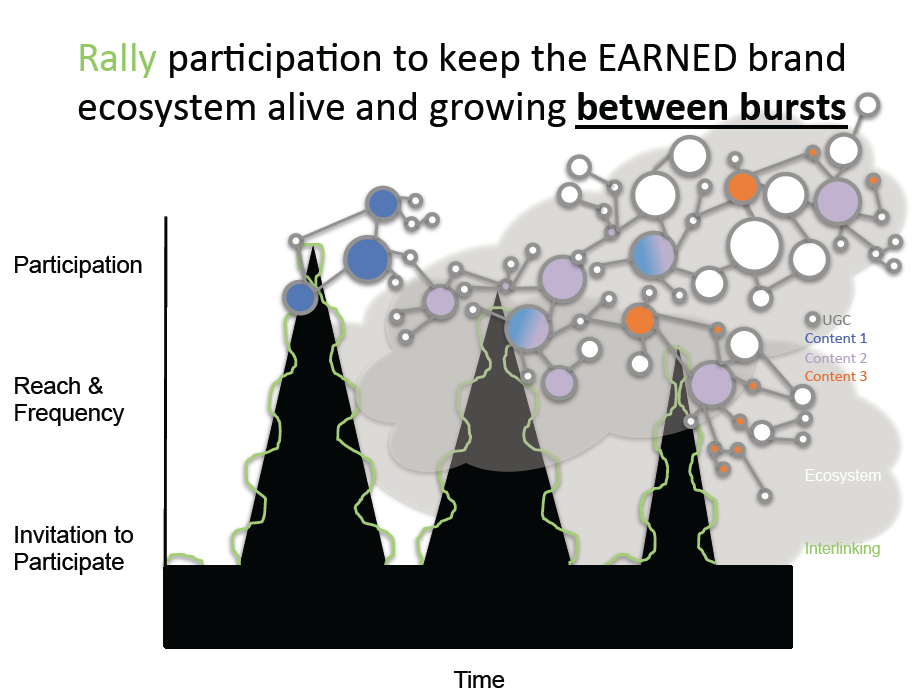
Source: Heather Albrecht of Digital Connections Pty Ltd http://www.digitalconnec6ons.com.au
It’s an exciting time to be in both the retail and communications businesses, the way people consume media and even the way they browse and shop is changing as fast as technology allows. However as long as we continue to create engaging ideas that get infront of the right people at the right time, we will continue to see results – some things never change!
Author: Alex Leece
The Continuous Channel – The New Retail Frontier?
 I recently watched a presentation by Steve Nave, former SVP & General Manager of Walmart.com and in it he raised the concept of the continuous channel as a new frontier for retailers. He talked about rather than seeing retail as a multi channel process, we should be taking a step back to look at the entire brand, letting customers shop the way they want to shop and bringing it all together into one continuous channel. Essentially instead of serving customers through individual channels, we serve them at touch points across channels by optimising the organisations processes and technologies. The picture on the left is a trial advertising program by Tesco in South Korea. In a “virtual store” concept, people could shop with their mobile phones whilst waiting for a train directly from an ambient installation set up to look like a store and have their groceries delivered to their home hours later. This is a great example of allowing shoppers to purchase in new ways, on their terms and across channels.
Traditionally there were only three channels which organisations could utilise to actively generate sales, the stores themselves, direct sales (phone/direct marketing) and printed catalogues. These channels essentially each only had a single touch point within them. This has now all changed with the advent of the internet and the establishment of ecommerce as a legitimate channel. The internet differs from the three traditional channels in that it doesn’t simply create one touch point but a vast array of new ones. It feeds emerging technologies as it expands into mobile, tablet, TVs, instore, cars and not to mention social media. The key thing to note here is that when you think about it, none of these new touch points are actually a new channel in themselves, they are all being fed by the existing internet channel. The opportunity here for retailers is that increasingly everything is becoming a touchpoint with which consumers can transact with your organisation. Whilst this may sound similar to the concept of multi-channel retailing, the difference is in the thinking of how the channels and touch points intersect together and how the organization responds to the customer across them to drive sales.
For this to work, information, and data must flow freely between channels on the customer end and within the business units of the organisation, no silos. Customers more and more expect to be able to shop across channels, for example purchasing an item via mobile and collecting it instore. They need to be able to shop when and how they want to, customers shop with your company as a whole, not with an individual channel. With this in mind we can look at new ways to intersect them. I think whilst it may be very hard to truly get to a point where this is fully achieved but it is a good journey to be on and will help drive retailing into the future.
The Walmart example that Steve discussed is a good one to look at in terms of a big retailer testing out initiatives which cross the channel boundaries. Walmart has implemented the below strategies with their ecommerce platform that go some way to letting the customer shop their way and intersects both instore and internet enabled channels:
Site to Store – customers could purchase products online and have them sent to their local store for collection.
Pick Up Today – customers can view a stores stock online, purchase and put it on hold knowing it’s ready for them when they arrive in store to collect it.
Scheduled Delivery From Store – customers can order something online from a store and schedule the delivery for when they want it to arrive at their home.
These strategies are interesting in not only do they cross the typical “channel” boundaries, but really add utility for the customer.
Looking forward, Steve identified the below future milestones he thought to be criticial to driving the continuous channel strategy going for Walmart:
–Social – not just in a setting up a Facebook page way but really looking at what the intersection is between business and social. They started an initiative called “Walmart Labs” to explore new technology around understanding what people are talking about in social media. With that insight, then as brands we can come to people and be relevant to them and the local community TODAY in new ways. For example we could use the information to influence what store staff talk to customers about when they enter the store, the POS instore, or what new initiatives stores can do for people. It’s about more then just sending emails of a relevant sale to people who have indicated they like blenders on Facebook.
-Mobile – This will help drive the continuous channel as a future for ecommerce. Customers are turning to mobile devices more and more for information when they want it quickly. To help keep pace in this area, Walmart are going so far as acquiring tech company start ups to remain agile and take advantage of the latest advances in technology.
-New Store Models – Can ecommerce begin to help influence store layout? Walmart are now siting the online division at the table when discussing how stores are designed to help bring online into the bricks and mortar channel. For example we don’t necessarily need the store floor space to show all products if we can back it up with online channels. For example you could show just 3 digital cameras in each price point, knowing 300 more are online which we can get to store for someone today, or to their home.
Whilst we won’t see the end of bricks and mortar stores, customers will always have something to do instore, (a point I touched on in my post Why Bricks and Mortar Stores Will Always Have a Role to Play) retailers will need to rethink their operational strategy to keep up with how consumers expect to be able to shop, on their terms, across channels.
Alex
 // Rebuilding_Creativity